Meeting the Black Mambas
An evening by lantern light with the world's first all-female anti-poaching unit.
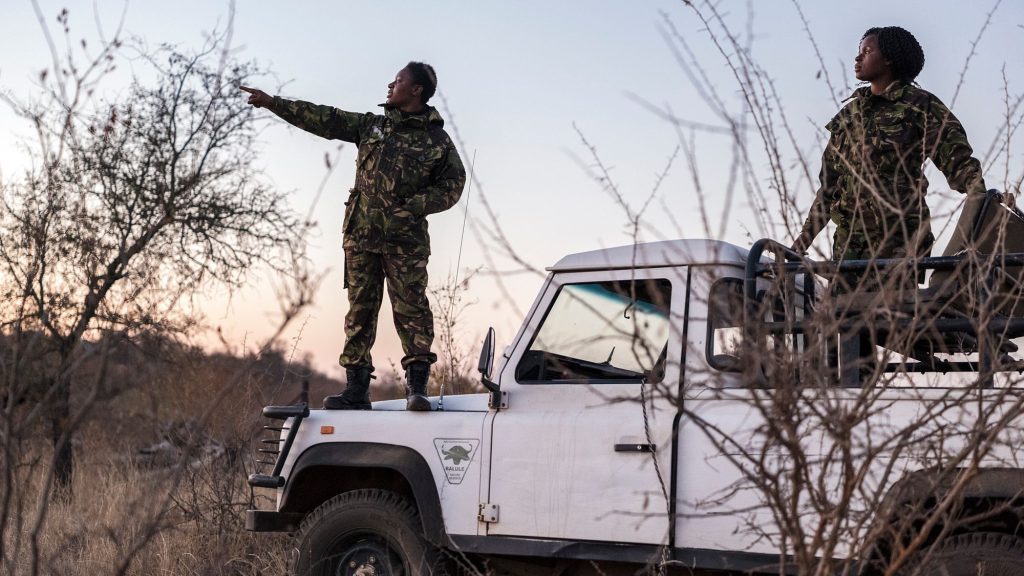
When Leitah Mkhabela was 16, a school programme took her into Timbavati Game Reserve, on the edge of Kruger. She had grown up being taught to fear the animals on the other side of the fence. She came out of that reserve wanting to protect them.
She joined the Black Mambas as a ranger in 2014 and went on to supervise the unit. The Mambas are one of the most compelling conservation stories in Southern Africa, and one of the few you can sit down to dinner with. That is thanks to Intrepid, a partner I work with on their small group trips and on tailor-made journeys I design with their team on the ground.
Who the Black Mambas are
The unit was set up in 2013 by Transfrontier Africa, and it was the first all-female anti-poaching unit in the world. Today around 40 young women patrol 20,000 hectares of Olifants West Nature Reserve, part of Greater Kruger. In 2015 the United Nations Environment Programme named them Champions of the Earth.
They do the job unarmed. They walk the reserve boundaries every day, find and destroy snares, run vehicle stop-and-searches, and set up camera traps and early-warning technology. If poachers do appear, other units back them up. The Mambas' work is to see things first, and to be seen.
Beyond the patrols
The patrols are only half of it. Through their Bush Babies programme, the Mambas teach conservation classes to local schoolchildren, and many of those children get to visit the reserve, just as Leitah did at 16.
Leitah makes the point better than I can. The poachers come from the same villages as the children. When a child goes home talking about rhinos, an uncle or a father starts to see that poaching is destroying that child's future, not just an animal. That is conservation that starts at the kitchen table, and it is the reason I think this story matters more than most.
An evening with the Mambas
Meeting them means an overnight stay at the Black Mambas' headquarters. The rangers take you out on a walk to show you how they find and destroy snares. Dinner is by lantern light, and afterwards everyone sits round the campfire while the team tell you how they became rangers.
The connection goes further than the visit. The Intrepid Foundation partners with Helping Rhinos, which supports the Mambas' work directly.
One more detail told me a lot about the operator. At Victoria Falls, Intrepid asks its travellers to skip the lion walks on offer, because lion walking feeds the captive breeding and canned hunting industry. An operator that tells you what not to do is one I trust with the rest.
Most safaris show you the animals. This one introduces you to the women keeping them alive, and gives you a night round their fire.
If you'd like a seat round their fire, get in touch and I'll show you how to make the Black Mambas part of your time in Southern Africa.
FAQs
Can you visit the Black Mambas anti-poaching unit?
Yes. Visits include an overnight stay at the Black Mambas' headquarters in Greater Kruger, with a walk alongside the rangers, dinner, and time round the campfire. Miranda Seymour of Seymour Escapes can build a visit into a Southern Africa itinerary.
Are the Black Mambas armed?
No. The unit is unarmed. They focus on foot patrols, destroying snares, vehicle checks and surveillance, and other units back them up if poachers are found.
Where are the Black Mambas based?
Olifants West Nature Reserve, part of Greater Kruger in South Africa. They patrol 20,000 hectares.